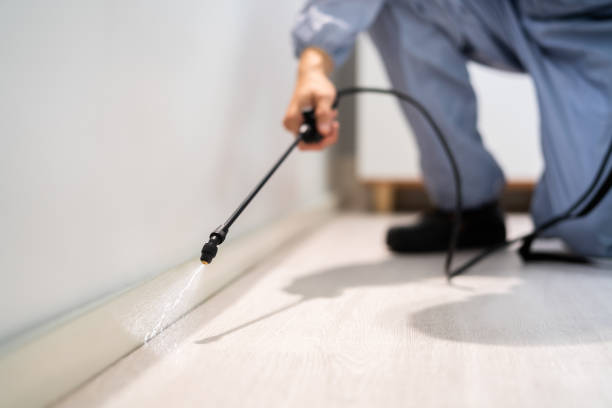
Mud tubes on the foundation or frass near window sills both mean the same thing — termites are actively feeding, and every week matters. Because termite damage typically isn't covered by standard homeowners insurance, catching it early is the only real safeguard against a costly repair bill.


Our inspectors hold state wood-destroying organism (WDO) licensing and produce documentation accepted for real estate transactions.
When a Loop, PA customer reports a swarm or visible mud tubes, we move that inspection ahead of routine requests.
You'll see the full cost of liquid termiticide or bait station installation before we start — priced by linear foot of foundation, not guesswork.
Our equipment includes borate wood treatments, termiticide injection rods, and monitoring stations for long-term colony elimination. Beyond the treatment itself, you'll get a documented moisture assessment, since damp foundation zones are usually the first areas termites return to.
We trench and treat the full foundation line so worker termites carry the termiticide back to the colony itself.
Bait stations give ongoing colony-level monitoring, useful for properties where liquid trenching isn't practical.
Localized injection and, when needed, structural fumigation for drywood termites living inside wood members rather than the soil.
Licensed inspection documentation formatted to lender and closing requirements, delivered within the timeline your transaction needs.
We document structural damage with photos and moisture readings, then connect you with repair contractors if needed.
We treat soil and foundation footings pre-pour so new builds start with a termite barrier already in place. We cross-check readings with a second meter on any borderline case, since termite treatment decisions shouldn't rest on a single instrument.

Tell us what you're seeing — mud tubes, swarmers, frass, or damaged wood — so we schedule the right inspector and equipment.
We show up equipped to inspect thoroughly, not just visually scan — moisture readings catch what the eye misses.
You get a complete inspection record, including photos of mud tubes, damage, or conducive conditions found on-site.
Every treatment includes a documented warranty term and, where applicable, a station-check schedule going forward.
Found mud tubes behind our water heater during a routine check. Inspector caught it before it reached the framing.
Needed a WDO report fast for a closing deadline. Report was in my inbox the same day as the inspection.
Bait stations have been checked every quarter for two years now, exactly as scheduled. No surprises.
They found drywood termites in a rafter we never would have checked. Saved us from a much bigger repair later.
Refinancing required a current WDO report and ours had expired. They got an inspector out within two days to meet the lender deadline.

We serve Loop and surrounding Loop, PA communities, moving fastest for active infestations and time-sensitive closing inspections. Older Loop neighborhoods with mature tree cover tend to carry higher subterranean termite pressure, which shapes how we prioritize inspection requests.

Subterranean termites live in soil and travel via mud tubes into structures; drywood termites live entirely inside wood, requiring no soil contact.
Pricing is based on linear feet of foundation and treatment type — we provide an exact written quote after inspection, not a phone estimate.
A wood-destroying organism report is commonly required for financing; we issue licensed reports formatted for that purpose.
Non-repellent liquid barriers typically carry a multi-year warranty period, with annual re-inspection recommended.
Over-the-counter sprays typically only repel termites locally rather than eliminating the colony, which can make the infestation harder to treat professionally later.
Swarmers are reproductive termites leaving a mature colony to start new ones — seeing a swarm usually means an established colony is nearby. We recommend a yearly check-in after initial treatment, since soil grading and mulch buildup around a foundation can change year to year.
A documented inspection today is cheaper than structural repair later — call to get on the schedule.
Call +1-844-564-2570